Airbnb's No-Chores Rule: Two Hosts, Two Reactions
Two UK hosts read the same Airbnb rule and came away with opposite worries. Here is what each one told the BBC, and what the rule could mean for homes like theirs.
What is this story about?
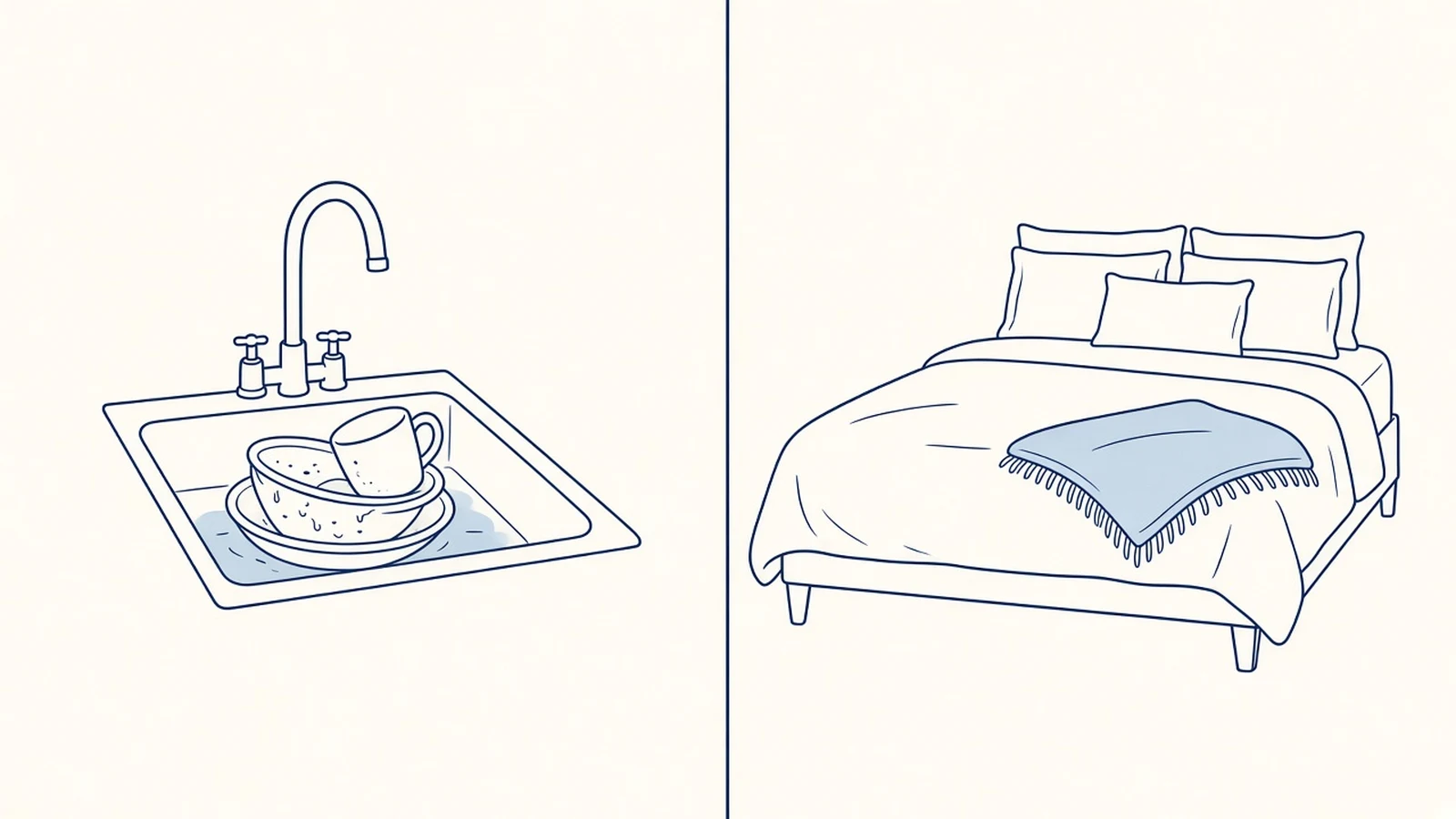
It is about one rule and two reactions. The BBC has published a report on Airbnb's new house rules, and two of the hosts in it land at opposite ends. One, in Wales, worries about the mess and the cleaning bill. The other, in London, expects guests to behave the way they already do.
Both hosts are in the UK. The rule is not. The BBC reports that the updated guidelines apply to bookings made globally from 20 November, so a host anywhere reading this is working under the same change. You can read the full report on the BBC News site.
What does the rule allow hosts to ask?
In short, guests should not be asked to do a cleaner's job, but small requests are still fine. Airbnb's October 20 Resource Center post, Important changes to house rules, gives four examples, two of which matter most for these hosts:
- Dishes: "Guests shouldn't be asked to wash and put away dishes, but you can ask them to put used dishes in the sink."
- Trash: "Guests shouldn't be asked to take garbage off-site, but you can ask them to separate their trash and recycling into designated indoor bins."
Hosts now pick from seven standard rules, including one to require guests to lock up at checkout, and add "reasonable requests" on top. This story is about how two hosts reacted, not the policy itself, so if you want every example and the enforcement steps, the full rule change is broken down here.
Why does the host in Wales fear the mess?
Because she has already seen it. Lisa Clewes told the BBC about a group who checked out of her Welsh holiday let after a dinner party and left it "in a complete mess", with broken glasses, cans on the floor, pans of food on the table and fish guts in the garden.
"It was really unbelievable. Had I had another booking the same day, I would have had to cancel or delay check-in," she told the BBC.
The BBC reports that her cleaning fee covers around 75% of what she pays a cleaner, and that she asks guests to empty the fridge, put rubbish in the bins and load the dishwasher. It also reports that a turnover of her three-bedroom property typically takes cleaners four hours. Her fear, as the BBC puts it, is that guests leaving more mess could mean hiring extra cleaners and higher costs, which may end up being passed on to guests.
Set her checkout list beside Airbnb's examples and the picture is mixed. Asking guests to put rubbish in indoor bins looks close to what Airbnb says is still allowed. Loading the dishwasher sits closer to the line on dishes, where Airbnb's own example of a fair request is putting used dishes in the sink. Her worry is not really the list, though. It is the one bad group, and what it costs when the next guests are due.
Why does the London host shrug?
Because his guests were never doing much to begin with. Matt Porsz, who hosts and manages Airbnb properties full time, told the BBC he thinks the update will improve the guest experience without changing how most people behave.
At his property in south-west London, the BBC reports, guests are asked only to lock up and return the keys. "People sometimes strip the beds or do things without me asking, and that's nice for my cleaners, but I don't expect it," he said.
His reason for calm is the review system. "If I put a big chore list, I wouldn't expect a five-star review and vice versa," he told the BBC, adding that a guest who leaves a place in a state is not going to get a good review either. His summary of what Airbnb is doing: "Airbnb is trying to cut out the silly stuff because it's not a good guest experience."
His one request, lock up and return the keys, is close to one of Airbnb's new standard rules almost word for word.
So who is right?
Going by what each told the BBC, both may be right about their own homes. The difference between these two is less about attitude and more about what each one was asking before the change.
A host whose checkout list was already short has little to rewrite. A host who leaned on guests to do part of the turnover has a real gap to close, and it shows up as cleaner hours. The BBC report shows both, and it does not claim to know which reaction will prove more common.
The BBC also spoke to others with stronger views on each side. A North Yorkshire cabin co-owner told the BBC he and his husband have cut the cabins they list on Airbnb from five to two, and some hosts say they're leaving Airbnb altogether. A guest who stays in Airbnb homes and runs a cleaning company told the BBC: "If you're running an Airbnb as a business, professional cleaning is a cost of doing business." Those voices are in the full BBC piece.
What would change for a host like either of them?
For a host like Lisa Clewes, the gap is the checkout list, and the dishwasher ask is the line most likely to need rewriting. Any work guests stop doing lands on her cleaners, and the BBC reports her cleaning fee already covers only around 75% of that cost. If she raised the fee to close the gap, it helps to know how it is charged: most hosts pay a 15.5% Airbnb fee, cleaning fee included.
For a host like Matt Porsz, very little moves. His one ask, lock up and return the keys, already matches one of Airbnb's standard rules, so his list can stay as it is, and he told the BBC he does not expect most guests to behave differently.
The difference is not about who cares more about guests. It is about how much of the turnover each one handed to guests before the change. Other hosts who share their own home are adapting differently, because a guest in a spare room is a different case again.
FAQ
Does the rule only apply to UK hosts like these two?
No. The two hosts in the BBC report are UK-based, but the BBC reports the guidelines apply to bookings made globally from 20 November.
Could the host in Wales still ask guests to load the dishwasher?
Airbnb's post does not name dishwashers. Its example says guests shouldn't be asked to wash and put away dishes, but can be asked to put used dishes in the sink, so loading the dishwasher sits closer to the line than her other asks.
Does the London host need to change anything?
Going by Airbnb's post, probably not. His only ask is to lock up and return the keys, and "Lock up at checkout" is one of Airbnb's seven standard rules.
Sources
- BBC News, "No more washing up: How Airbnb's new house rules have divided hosts and guests", Yasmin Rufo, accessed November 2, 2026: https://www.bbc.com/news/articles/ckjwez8g5dyeo
- Airbnb Resource Center, "Important changes to house rules", October 20, 2026, accessed November 2, 2026: https://www.airbnb.com/resources/hosting-homes/a/important-changes-to-house-rules-21
- Airbnb Resource Center, "How much does Airbnb charge hosts", accessed November 2, 2026: https://www.airbnb.com/resources/hosting-homes/a/how-much-does-airbnb-charge-hosts-288
- Airbnb Help Center, article 1857 (service fees), accessed November 2, 2026: https://www.airbnb.com/help/article/1857