Can't Make Rules Anymore? These Hosts Say Their Listing Now Chooses the Guests
With fewer rules to lean on, some hosts say the description, the photos and the price do the work. Here is what they told other hosts this week, and where the honest limits are.
Can hosts still write their own house rules on Airbnb?
Only in one place. Airbnb's Resource Center says hosts should keep standard rules and reasonable requests in the listing's rules section, and states: "You shouldn’t write additional rules elsewhere on your listing, in messages, or on signs in your home." Everything else has to set the tone without sounding like a rule.
If you want the full list of what you can still ask, The Booked Host has a plain guide to what Airbnb's new house rules allow. This piece is about the hosts who say their listing, not their rulebook, now decides who books.
These are host experiences and claims posted in public forums. They are not proof that photos or wording change how guests behave, and we have not verified any of the results they describe.
What did these hosts actually do?
They describe changing who the listing speaks to, rather than adding rules.
On AirHostsForum, in a thread titled "House Rules additions are now called 'requests'?", a host posting on October 23 described noticing that tidy guests and messy guests simply live differently. The host's response: "So then I started to consciously tailor my listing to become more attractive the ones who valued cleanliness and order, by emphasising cleanliness and order. And over time, that’s who started consistently showing up."
The host added: "I even priced it a bit higher than the other comparable listings in my area, but somehow that didn’t seem to make any difference. And we’re now well booked all the way into Autumn of 2027." That is the host's account, not a measured pattern.
A homeshare host replied in the same thread on October 27: "I agree that the language and photos selected can make a significant difference." The replier explained the approach in one line: "I try to pitch my homeshare to people attracted to warmth, cleanliness, and kindness."
Does a nicer, slightly pricier listing bring better guests?
Some hosts believe so, and the same hosts say it is not a guarantee.
A host on the Airbnb Community Center, who describes themself as a Superhost for 12 years, wrote on October 27: "I still have many great guests because my property is nicer and a little more expensive but it always shocks me when I get a bad one."
Presentation may shift the odds in a host's favor, in their experience. It does not control what any one guest does. Price position works the same way. The Booked Host looks at the other end of that scale in why a guest who leads with a discount request can be a warning sign.
How are homeshare hosts keeping shared spaces open?
By deciding what to offer, instead of what to forbid.
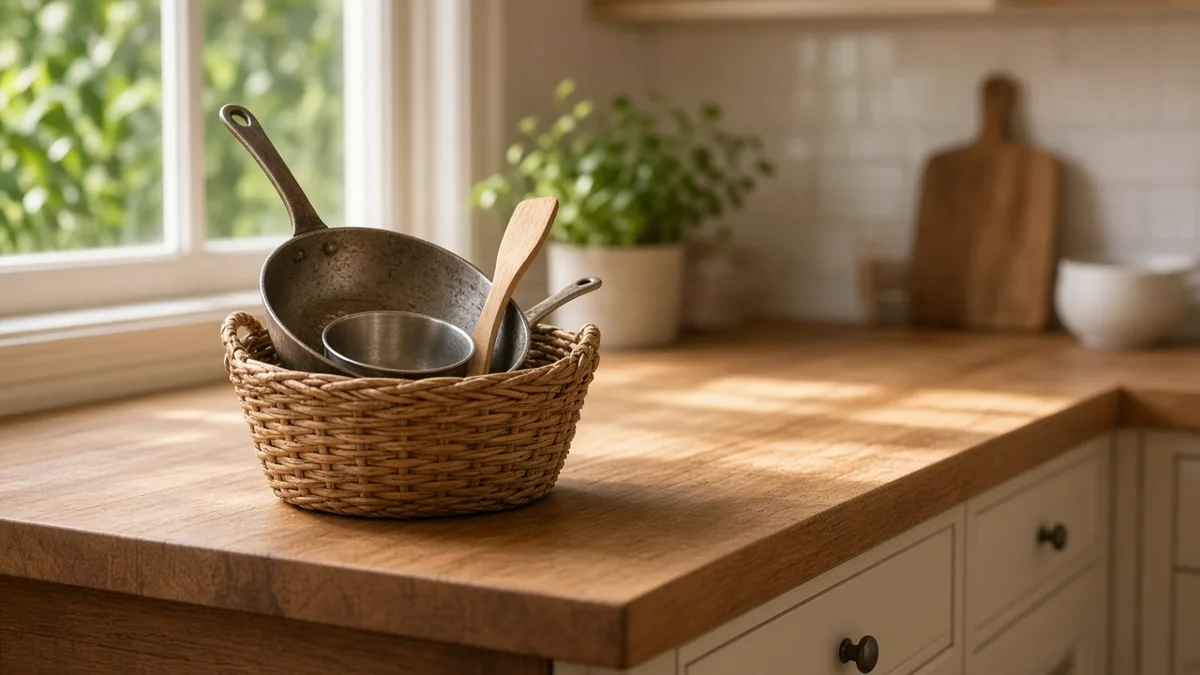
A Superhost on the Airbnb Community Center, who rents two of the three rooms in their home and features their kitchen in the listing, posted on October 27 about protecting good cookware without closing the kitchen. The plan: "I'll be putting together a small basket with a sauteé pan, a saucepan, a spatula, disposable plates, cups and cutlery."
This host is shaping the stay through what the listing offers and shows, not through a new rule. Host Stories looked at more of these homeshare adjustments in how homeshare hosts are adapting to Airbnb's Nov 20 rules.
Do listing photos attract a certain kind of guest?
Hosts in these threads think photos are part of the signal, though nobody here has shown that photos change behavior.
What photos can do is set an expectation. A clean counter, a made bed and a living room that looks cared for tell a guest what kind of home this is. The catch is accuracy. Airbnb's ground rules for home hosts say the photos and description should "accurately represent the space provided", and a photo that looks better than the room invites the wrong expectations and the wrong reviews. The Booked Host covers that risk in what happens when your Airbnb looks better in person than online.
The goal is to show the place as it is, better lit. That can mean shooting at the right time of day, clearing clutter you would clear anyway, or using photo enhancement software to fix dim light and color on an otherwise accurate photo of a tidy kitchen, without adding or removing anything in the room. We link to one example because the point of that step is accuracy, and its site shows before-and-after comparisons so a host can check that nothing in the room changes.
Will Airbnb turn my welcome message into a "request"?
Some hosts say it already has, but Airbnb has not confirmed this.
The homeshare host quoted above wrote: "Airbnb’s new AI has now taken this “welcome message” language and inserted it as a not-rule “request” that guests see before booking." That is the host's belief about what happened to the listing. A separate AirHostsForum thread notes that Airbnb has not confirmed that AI changed these fields, so treat the cause as unclear.
The practical step is simple: preview your listing as a guest would see it, and check whether any of your own wording now appears as a request. Airbnb's Resource Center also says guests may see an alert on a listing, such as "includes cleaning requests," if an issue goes unresolved.
What can hosts still shape?
Based on what these hosts describe, and checked against Airbnb's own rules:
- The description. Say what kind of stay this is: quiet, cared for, a real home. Describe, don't demand.
- The photos. Accurate, well lit, and showing the spaces the way you keep them.
- The price position. Some hosts say pricing a little above comparable listings has not hurt them. That is their experience, not a rule.
- What you offer. A cookware basket instead of a locked kitchen, for example.
- The rules section. Keep standard rules and reasonable requests there, and nowhere else.
Not every host thinks this is enough. In the same AirHostsForum thread, one host listed the tools hosts say they have lost, and others are stepping back entirely, as Host Stories reported in why some hosts are leaving Airbnb. For the hosts staying, the listing is the part they still write.
FAQ
Can I still write house rules on my Airbnb listing?
Yes, but only in the rules section. Airbnb's Resource Center says hosts should not write additional rules elsewhere on the listing, in messages, or on signs in the home.
How do hosts attract tidier, more respectful Airbnb guests?
Some hosts say they emphasise cleanliness and care in the description and photos, and price slightly above comparable listings. These are host experiences, not proven results, and one Superhost notes a bad guest still happens.
Do listing photos change how guests behave?
No one has shown that. Hosts say photos set expectations about the kind of home it is. Airbnb requires photos to be accurate, so the aim is to show the place as it is, better lit.
Did Airbnb's AI turn house rules into requests?
Some hosts believe their welcome message wording appeared as a guest-facing request. Airbnb has not confirmed that AI changed these fields, so the cause is unclear. Preview your listing as a guest to check.
What is Host Stories?
Host Stories (bnbhoststories.com) publishes real experiences from short-term rental hosts, told through their own words and attributed to the forums where they posted.
Sources
- AirHostsForum, "House Rules additions are now called 'requests'?" (posts of October 23 and October 27, 2026): https://airhostsforum.com/t/house-rules-additions-are-now-called-requests/65220
- Airbnb Community Center, homeshare kitchen post, October 27, 2026: https://communitycenter.airbnb.com/forum/7498ebe6-5107-4e20-9ef8-b9a063c663c6/post/2272d96b-4b99-4bf4-a3d2-fe79016ce8f8
- Airbnb Community Center, Grow your hosting business forum, reply of October 27, 2026 (quoted reply only): https://communitycenter.airbnb.com/forum/074005e0-0626-4b7e-92f9-8bd3b1daab97/post/ebebb2f0-0051-4474-b21f-7ef55d7e8917
- Airbnb Resource Center, article 21, checked October 28, 2026: https://www.airbnb.com/resources/hosting-homes/a/21