How to Tell If Your Empty Calendar Is the Market or Your Listing in One Afternoon Without Cutting Your Price Again
Is Everyone Facing This? Hosts From Copenhagen to Paris on the 2026 Booking Slowdown
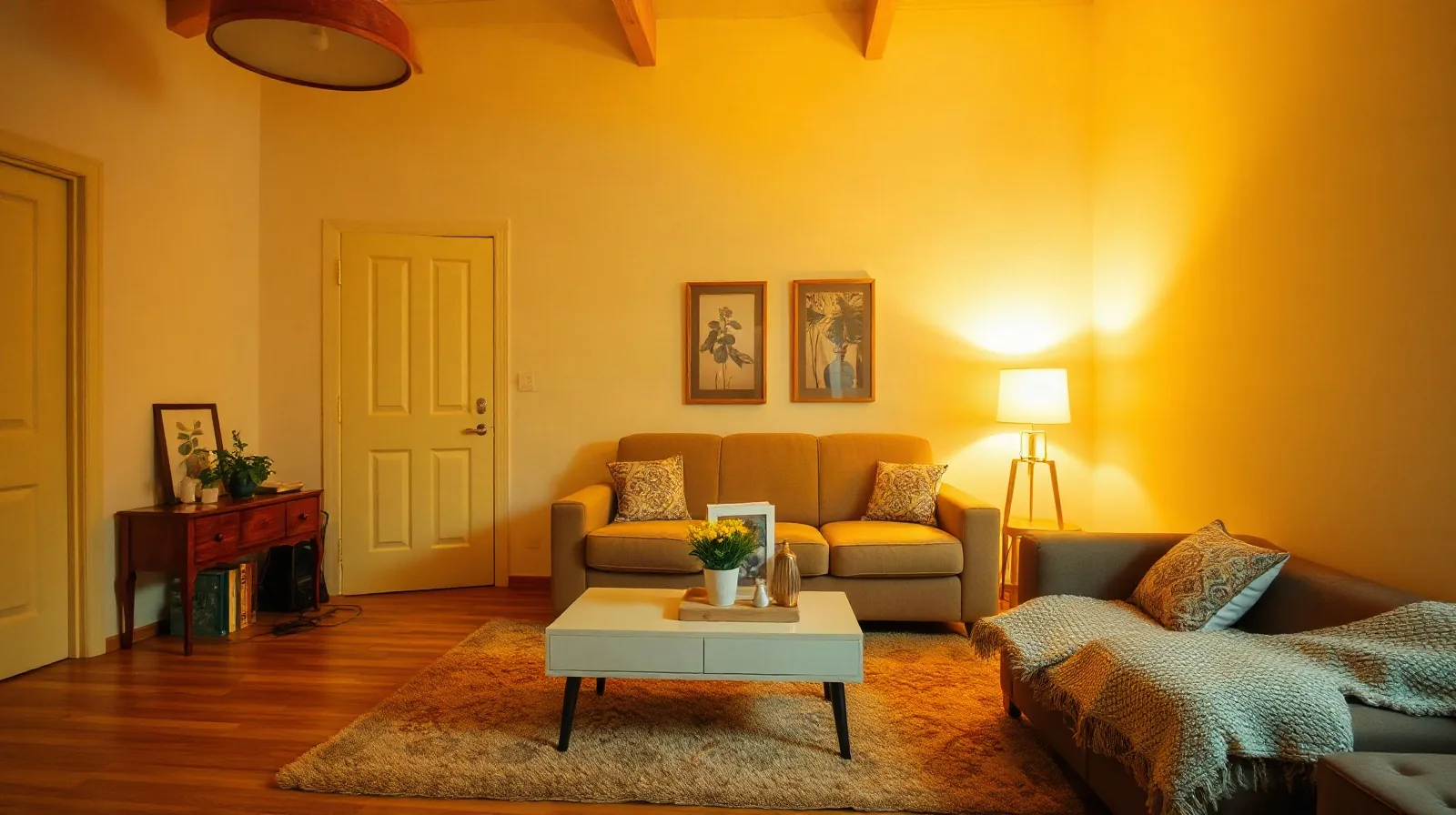
On October 18, a host in Frederiksberg, the leafy district wrapped inside Copenhagen, opened a thread on Airbnb's Community Center with a title that needed no translation for anyone who has stared at a blank month: "Jeg syntes at aktiviteten er lav på min bolig." I think activity on my place is low.
The post was a single question. In the Community Center's English rendering: "How do you perceive the activity at FRB C?"
Eleven replies later, the thread had become a small portrait of autumn 2026. Someone asked diagnostic questions. Someone else reviewed the listing line by line. And one host, three months into hosting in the Philippines, said all three of her units were fully booked.
That spread of answers is the story of this fall. Across forums in several languages, experienced hosts are asking the same thing: is this happening to everyone, or just to me? The honest answer, from the hosts themselves, is usually "a bit of both." It's the market, it's the timing, and it's often one fixable gap in the listing. Rarely is it a single magic setting.
The question everyone is asking
The Copenhagen host was not alone, and not early. In early October, a host named Darryl posted a listing critique request for his place in Tucson, Arizona:
"I've been a host for few years and usually have busy season in Tucson when the weather cools down, but this season is off to a terrible start and I'm not getting ANY bookings."
This isn't a new host wondering whether Airbnb works. It's someone who knows the rhythm of his market, and the rhythm has stopped.
Further back, a Community Center thread opened in January 2025 by Debra, a seven-year host, kept collecting company. In September 2025 a host in Dolan Springs, Arizona, wrote:
"I am in Arizona , 6 years host and we do not have one booking for the rest of the year."
She added: "Our listing comes up FIRST! if you search our area." Her place had Superhost status, Guest Favorite, and a 4.99 rating. Her explanation pointed outward, at travel itself: most of her summer guests were usually Europeans heading for the Las Vegas airport, and that summer, she wrote, "NOT ONE."
A listing that ranks first and still doesn't book doesn't have a visibility problem. Its guests simply haven't come.
What the numbers say, and what they don't
Forum posts are lived experience, not data. For a wider view, the most useful recent read comes from AirROI, a short-term-rental data firm. In a piece published October 2, 2026, "Are Airbnb Bookings Down in 2026?", it compared the same 616,303 U.S. listings that had been on Airbnb since at least September 2024. Those established homes "booked 13% fewer nights from January through April than a year earlier." In June and July they "booked within 1% of last summer's nights."
AirROI also notes the other half of the picture: Airbnb told investors its North American nights booked grew at the fastest pace in almost three years. Both things can be true at once. The platform can grow while longtime hosts book fewer nights, because newer listings are joining the competition and because demand moves between markets and seasons.
It doesn't cover Copenhagen or this October, so treat it as backdrop, not a verdict.
Airbnb is also changing its own pricing tools mid-season. Its Resource Center article "Review your price" (October 13, 2026) says: "Dynamic pricing started rolling out in October 2026 and will be available to all hosts in the coming months."
Stage three: algorithmic paranoia
On October 19, a member of AirHostsForum reposted a piece of satire titled "THE SEVEN STAGES OF AN AIRBNB HOST," credited in the post to "Vanessa from Vernazza, Italy." It's a joke, and it's not data, but stage three landed for a lot of hosts:
"Bookings start drying up. Your listing seems to have vanished off the face of the earth."
And then, a few lines later:
"You begin to suspect that the algorithm has a personal vendetta against you."
The satire nails what that stage looks like from inside: "You start fiddling with prices, swapping photos and moving dates around on your calendar as if you were trying to defuse a bomb."
It's funny because it's familiar, and it's also the trap: when everything changes at once, nothing can be learned. The Booked Host has a longer piece on the emotional side of algorithm anxiety that's worth reading if this stage sounds like your October. Here, the useful point is simpler: the fiddling usually happens before the diagnosis.
What hosts tried, and what didn't move
Hosts don't sit still. They try things, and the results are mixed.
Lower prices. This is the first move for many hosts, and the forums are increasingly sceptical about it. In an AirHostsForum thread asking "What do you check before lowering your price for empty dates?", one host wrote:
"I've found that lowering the price generally doesn't make much difference when demand is low."
Another, who hosts in St Lucia, added: "Demand in our area is really low right now." A third host in that thread had already done the sensible homework on costs and comps, and still wrote: "I did all that, but it has gotten slow."
That last line may be the most honest sentence of the season. Doing everything right doesn't guarantee an October.
Change a policy. On BiggerPockets, a Florida host with properties in the Kissimmee/Orlando area described a four-property test in 2025 after his calendars died. His advice: "switch to "Flexible" cancellations and I bet your bookings will go back to "normal"." He reported 11 bookings each on the two properties he moved to flexible cancellation, against almost none on the others. That's his own claim, from his own listings.
The replies are the most useful part. One host pointed out the trade-off: "Flexible cancellation will probably increase your cancellation rate too." Another said, "We are strict on cancellation policy and bookings are great in both markets." A Tampa manager put it as "Its sort of a case by case basis." And the same commenter who flagged cancellations offered the rule many hosts learn the hard way: "The key thing I learned is to only change one variable at a time."
Upgrade instead of discount. In a BiggerPockets thread titled "REPORT FROM THE SMOKIES: We've reached the bottom," one host described the opposite of a price cut:
"instead of discounting I did some soft upgrades to my listings, and now I charge about 30% more than before and one property hit 100% occupancy this month."
Again, that's one poster's experience, not a promise. But it's a useful counterweight to the reflex that empty dates always mean the price is too high.
The same thread holds another clue that matters this fall. A host in Panama City Beach wrote: "people are definitely continuing the trend of booking closer to their arrival date." A Tampa manager agreed that close-in bookings were still the trend. If guests are booking later, a calendar that looks empty six weeks out may simply be early. It doesn't have to mean it's broken.
What the Copenhagen thread got right
Back in Frederiksberg, the replies are a small masterclass in how to separate the market from the listing.
The first useful question came from a host in Lagos, Nigeria:
"Have you noticed a drop in your listing views, inquiries, or actual bookings? Understanding which area has slowed down can help identify what might need attention."
That's the whole diagnostic in two sentences. Fewer views means fewer people are seeing you, which points to visibility, dates or demand. Views without inquiries means people see you and keep scrolling, so look at price, cover photo and the search card. Inquiries without bookings means something on the listing page or in your replies is losing them.
When the Copenhagen host asked whether he could compare himself with other properties, the same host answered:
"Look at their pricing, photos, amenities, reviews, and availability to see where you might be able to improve."
Then a host from Hashimoto, Japan, actually opened the listing and reported back. In the Community Center's English translation: "There may not be enough photos; please add some landscape photos taken with your smartphone in landscape orientation." The same reply flagged something more basic. The amenity settings said the home had no "heating" and no "hot water." For a flat in Copenhagen heading into November, that's the kind of mistake that can quietly cost bookings, whatever else is going on in the market.
It's one community member's diagnosis, offered in good faith, and it isn't proof that photos or settings caused this host's slow month. But it shows something hosts in a panic tend to skip: someone checked the boring things first.
Click or conversion? Find which half is broken
The Lagos host's question has a sharper version, and Airbnb's own dashboard is built around it. Every quiet calendar has one of two problems. Either too few guests are seeing and clicking the listing, which is a visibility or click problem, or plenty of guests are opening it and not booking, which is a conversion problem. The fixes are different.
Airbnb's Help Center article on performance data for conversion lays out the funnel in plain terms. "Conversion has 3 stages," it says: first-page search impressions, when a guest sees the listing in search; "Search-to-listing conversion: The guest then clicks through to your full listing page"; and "Listing-to-booking conversion: The guest books your stay." The same page describes Views as the number of times your listings have been viewed over a set period, which "You can compare this to the average for similar listings."
There's a catch worth knowing before you go looking. That article is written "For Hosts who use professional hosting tools," so not every host will see the full funnel. Everyone with at least one booking can still check views. Airbnb's Help Center article on checking whether your listing shows up in search gives the desktop path: "Click Today and click Menu," then "Click Insights," then "Click Views."
Compare the last 30 days with the 30 before:
- Low views or low search impressions. Guests aren't reaching the listing page. Check that your calendar dates are actually open, then look at what shows on the search card: the cover photo, the title and the price beside it. Airbnb's article on how search results work says "the quality, popularity, price, and, for homes, location of a listing heavily influence" how a listing appears in search.
- Healthy views, few bookings. Guests are clicking in and leaving. That points at the listing page itself: whether the photos after the first one answer their questions, whether the amenities are accurate, and whether the total price, minimum stay or cancellation terms put them off.
A Community Center reply to a new host who had gone quiet after an early burst put the first branch neatly: "Click rate first: if lots of people see your listing but few click in, it's almost always the cover photo or your price versus similar places nearby." That's one host's view, not a rule.
Airbnb doesn't publish a benchmark for views per booking, so compare your listing with its own past and with similar listings. The Booked Host goes further into the second branch in its guide to Airbnb views but no bookings.
Fix the shop window before the price tag
Price matters. Airbnb is clear that it does: its search article says "one of the ways hosts can most directly affect the performance of their listing in search is by adjusting their price or offering discounts." But a price cut is hard to take back, and it does nothing for a search card guests scroll past. If the diagnosis points to clicks, the cheaper experiment is the presentation. Three pieces do most of the work.
A bright, clear cover photo. Airbnb's Help Center article on listing photos says "The first 5 photos are the most important" and adds: "Make sure the first one is amazing—that's the large one that shows up in search." Its Resource Center guide to taking great listing photos is practical about how: "Plan to take indoor photos when your rooms get the most daylight," "turn on the lights" if rooms are still dark, and "Shoot straight ahead." In practice that usually means leading with your best room, in daylight, with straight lines, rather than a hallway, a lobby floor or a dim bedroom. One Community Center reviewer told a struggling host: "Your top photo is of the lobby tiled floor - that is not going to make me click on your listing." The Booked Host's guide to cover photo order walks through choosing that first image.
A gallery ordered like a story of the stay. After the cover, the next photos should walk a guest through the stay the way they'd experience it: the main living space, the kitchen, the primary bedroom, the bathroom, then whatever makes the place different, such as the view, the garden or the workspace. There's no published data showing that a particular order lifts bookings, so treat this as good practice, not a formula. The point is that a guest who clicks in should never have to hunt for the room they care about. Airbnb's photo guide frames the goal well: great photos "attract attention, set clear expectations, and give guests confidence to book." If your current images can't carry that story, enhanced photos made from what you already have are one option to test against a reshoot.
A title that leads with what the guest gets. Airbnb's guidelines for writing your listing title note that "Your listing title is often the first thing people read when searching for a place to stay," and suggest you "try to use fewer than 50 characters." Its example swaps a generic "New, 3-bed apartment in Florence" for "Sunny walkup near the Uffizi." The Resource Center's Help your listing stand out guide gives similar advice: "Focus on special features." Lead with the benefit, such as the quiet street or the walk to the old town, not what the filters already show.
None of this proves that a better photo or title will fill a calendar. The comparisons just below are mostly observational, and one uses a difference-in-difference design. What these fixes do is make sure the listing isn't the reason guests keep scrolling. Make one of these changes, give it a week or two, and then check views and conversion again before you touch the nightly rate.
What else is Airbnb weighing besides the nightly rate?
Photos and videos sit inside quality, and saves, bookings, and messages are what Airbnb counts as popularity. A price below similar listings tends to rank higher.
Airbnb's article on how search results work says quality includes "listing content like photos and videos," and popularity is "how often guests save a listing to their wishlist, how often guests book, and how often guests message the host." Listings "priced below other comparable listings in the area," it says, "tend to rank higher in search." It adds, "Great media: High-quality listing photos and videos help attract guests' attention and improve engagement, which can improve ranking."
Do the photo studies show a bookings lift?
They show gaps between listings, not a promise for one home. Airbnb's comparison is observational. One paper uses a difference-in-difference design, which is quasi-causal.
The professional photography page says "hosts with professional photos may earn up to 21% more in earnings and receive 19% more bookings than other listings in their area," from "over 14,700 global listings over 1 year from 2024 to 2025, as compared to those without." The page calls these "not guaranteed results." Airbnb sells the service, so selection bias is likely.
A Management Science paper published December 20, 2021 says "Using deep learning and difference-in-difference analyses on an Airbnb panel data set spanning 7,423 properties over 16 months, we find that properties with verified images had 8.98% higher occupancy than properties without verified images (images taken by the host)." The abstract gives no years, so the stays are at least five years old. A working-paper version says "the coefficient reduces by 41.0% when we control for image quality," so photo quality, not only the verified label, is part of that gap.
He, Li, and Wang, in the International Journal of Research in Marketing (December 2023), studied New York City and San Francisco covers from December 18, 2015 to January 2, 2016. They found that "having a background image that features the living room and shows more interior design elements increases the booking rate, while featuring a bedroom decreases it." They tested brightness, clarity, and contrast: "The effects of the content features are larger than the effects of the aesthetic features." Two cities, one old holiday, and weak evidence on brightness.
Does Instant Book change who can find you?
Yes, for guests who filter for a home they can book instantly. Airbnb says that can improve search placement through your response rate.
Its Instant Book article says "Guests can use filters to search for homes that can be booked instantly. Instant Book homes are more popular with guests since they're able to more easily plan their trip." It also says "Instant Book positively affects your response rate for your home, which can improve your home's placement in search results."
What file does Airbnb's search crop want?
A horizontal photo, at the larger of two minimums that do not match.
The photo guide says "Take horizontal photos" and "images are cropped into squares in search results," and it asks for "at least 1200 pixels by 800 pixels." Help Center lists "at least 1024 x 683 pixels," so use the larger file. It also says "you can reorder the first five photos on your cover page."
Can more listing details raise bookings?
Only as Airbnb's own ceiling. No method is given, and the page says the information may have changed.
More control in the Listings tab (May 1, 2024, updated October 21, 2024) says "We've seen that listings with more details can get up to 20% more bookings."
An afternoon, not a fire sale
Put the threads together and you get a sequence most hosts can work through in one afternoon, before touching the nightly rate.
1. Check the market before the mirror. Airbnb's Review your price page describes a Similar listings tool that "lets you compare the average prices of booked and unbooked homes on a map of your area." If comparable homes nearby are also sitting empty, you're probably looking at the market. The St Lucia host's approach in the AirHostsForum thread is the same idea done by hand: she tracks about eight competing homes and a hotel to get a sense of overall demand.
2. Find where the drop actually is. Use the Lagos host's three-way split: views, inquiries, bookings. Each points to a different fix, and only one of them is about price.
3. Read your own listing like a stranger. Open it on your phone. Check the amenity list against reality, the way the Hashimoto host did. Count your photos. Look at what the first few images promise. In Tucson, the same reviewer suggested adding "photos of the parking lot and floor plan to your photo tour." Small, specific gaps like that are easy to fix and cost nothing.
4. Compare pacing, not panic. If guests in your market are booking closer to arrival, compare this October with last October for the same dates before you decide anything has collapsed. A Melbourne, Florida, property manager in the Smokies thread suggested comparing "booked revenue, rate and lead time on the exact same date last year before calling bottom."
5. Change one thing, then wait. Pick the most likely gap, fix it, and give it a week or two before trying the next thing. That's the lesson from the flexible-cancellation thread, and it's the opposite of stage three.
If the thin gallery turns out to be your gap, a reshoot isn't always required. Retaking a few wide, horizontal phone shots in good daylight is a fair first test, and tools exist for Better listing photos from the images you already have. Just keep it in proportion. Photos are one lever among several, and they won't cure a slow season.
On Host Stories we've written before about the photo refresh that helped a San Juan art home stop being undersold and about how hosts can test whether better photos support a higher nightly rate. Those stories share one lesson with this one: the listing should make the same promise the home keeps in person. Nothing more, nothing less.
For the step-by-step version of slow-season fixes, The Booked Host's guides on getting slow-season bookings without lowering prices, the fall 2026 cancellation wave and the Superhost with an empty calendar go deeper than we can here.
When it really is the market
Some of this can't be fixed from inside a listing. The Dolan Springs host ranked first in her own town and still had nothing booked for the rest of the year. AirROI's figures show a winter slump that reached every region it measured. A Tampa manager on BiggerPockets, writing in an October thread about suburban rentals, put it bluntly:
"Yes the market is soft, it is always so late 3rd and 4th quarters but rates going higher is not helping."
There's also the bigger shift we explored in Airbnb Used Hosts to Kill Hotels. Now It's Helping Hotels Beat Hosts.: the platform hosts built is changing around them, and not every change is theirs to control.
That's a reason to stop treating every quiet week as a personal failure. If comparable homes are empty, your reviews are strong and your listing is accurate, the kindest thing you can do for your business may be to hold steady, protect your floor price, and avoid tearing apart something that works.
The quiet answer to a loud question
The satire on AirHostsForum ends at stage seven, "Inner Peace." By then, it says, "You've finally realised that your worth as a host cannot be measured by Airbnb metrics."
There's something true in the joke. The hosts who seem calmest this fall aren't the ones with full calendars. They're the ones who checked the boring things first: the comps, the funnel, the amenity list, the photo count. Then they made one change and gave it time.
Back in Copenhagen, the Frederiksberg host's last questions in the thread were practical ones: how to create a guidebook, and where to fix the water and heating settings. That's where his "is it just me?" ended up, with a short list of things he could actually fix.
Is everyone facing this? Many hosts are, in many countries, in many languages. But the next step is still the same one for each of them: find out which part is the market, and fix the part that's yours.
Sources
- Airbnb Community Center, "Jeg syntes at aktiviteten er lav på min bolig" (Frederiksberg C, opened Oct 18, 2026): https://communitycenter.airbnb.com/forum/7498ebe6-5107-4e20-9ef8-b9a063c663c6/post/649b4f7a-a200-4905-97bf-6fd9e07e9a45
- Airbnb Community Center, "Critique My Listing - Darryl in Tucson, Arizona" (Oct 2026): https://communitycenter.airbnb.com/forum/7498ebe6-5107-4e20-9ef8-b9a063c663c6/post/bGVnYWN5X2Nj_2303630
- Airbnb Community Center, "Not getting any bookings." (opened Jan 2025; reply Sep 2025): https://communitycenter.airbnb.com/forum/7498ebe6-5107-4e20-9ef8-b9a063c663c6/post/bGVnYWN5X2Nj_2037662
- AirROI, "Are Airbnb Bookings Down in 2026?" (Oct 2, 2026): https://www.airroi.com/blog/are-airbnb-bookings-down-2026
- Airbnb Resource Center, "Review your price" (Oct 13, 2026): https://www.airbnb.com/resources/hosting-homes/a/review-your-price-655
- AirHostsForum, "To all new hosts, the progression" (Oct 19, 2026): https://airhostsforum.com/t/to-all-new-hosts-the-progression/65215
- AirHostsForum, "What do you check before lowering your price for empty dates?" (Sep–Oct 2026): https://airhostsforum.com/t/what-do-you-check-before-lowering-your-price-for-empty-dates/65169
- BiggerPockets, "Did your Airbnb bookings drop off a cliff since Summer? I am booked again." (2025): https://www.biggerpockets.com/forums/530/topics/1264848-did-your-airbnb-bookings-drop-off-a-cliff-since-summer-i-am-booked-again
- BiggerPockets, "REPORT FROM THE SMOKIES: We've reached the bottom" (Jul 2026): https://www.biggerpockets.com/forums/530/topics/1296281-report-from-the-smokies-weve-reached-the-bottom
- BiggerPockets, "Suburban STRs, a real option for accidental landlords?" (Oct 2026): https://www.biggerpockets.com/forums/530/topics/1306334-suburban-strs-a-real-option-for-accidental-landlords
- Airbnb Help Center, "Performance data for conversion": https://www.airbnb.com/help/article/2714
- Airbnb Help Center, checking your listing's views and search visibility: https://www.airbnb.com/help/article/687
- Airbnb Help Center, "How search results work": https://www.airbnb.com/help/article/39
- Airbnb Help Center, listing photos: https://www.airbnb.com/help/article/477
- Airbnb Resource Center, "How to take great photos for your listing": https://www.airbnb.com/resources/hosting-homes/a/how-to-take-great-photos-for-your-listing-687
- Airbnb Resource Center, "Guidelines for writing your listing title" (Feb 2, 2026): https://www.airbnb.com/resources/hosting-homes/a/guidelines-for-writing-your-listing-title-533
- Airbnb Resource Center, "Help your listing stand out": https://www.airbnb.com/resources/hosting-homes/a/help-your-listing-stand-out-658
- Airbnb Community Center, "No new bookings" (May 2026): https://communitycenter.airbnb.com/forum/7498ebe6-5107-4e20-9ef8-b9a063c663c6/post/bGVnYWN5X2Nj_2255078
- Airbnb Community Center, "Not getting any bookings" (Feb 2025): https://communitycenter.airbnb.com/forum/2d51a5c2-16fb-4016-833b-8f987dae813c/post/bGVnYWN5X2Nj_2061020
- Airbnb Help Center, professional photography (comparison window 2024–2025): https://www.airbnb.com/help/article/3381
- Management Science, "What Makes a Good Image? Airbnb Demand Analytics Leveraging Interpretable Image Features" (published Dec 20, 2021): https://doi.org/10.1287/mnsc.2021.4175
- Working-paper version, CMU KiltHub: https://doi.org/10.1184/r1/9588110.v1
- He, Li, and Wang, "Image features and demand in the sharing economy: A study of Airbnb," International Journal of Research in Marketing 40(4):760–780 (Dec 2023): https://www.sciencedirect.com/science/article/abs/pii/S0167811623000174
- Airbnb Help Center, Instant Book: https://www.airbnb.com/help/article/1510
- Airbnb Resource Center, "More control in the Listings tab" (May 1, 2024, updated Oct 21, 2024): https://www.airbnb.com/resources/hosting-homes/a/more-control-in-the-listings-tab-677
Forum figures are the posters' own claims, not verified data.